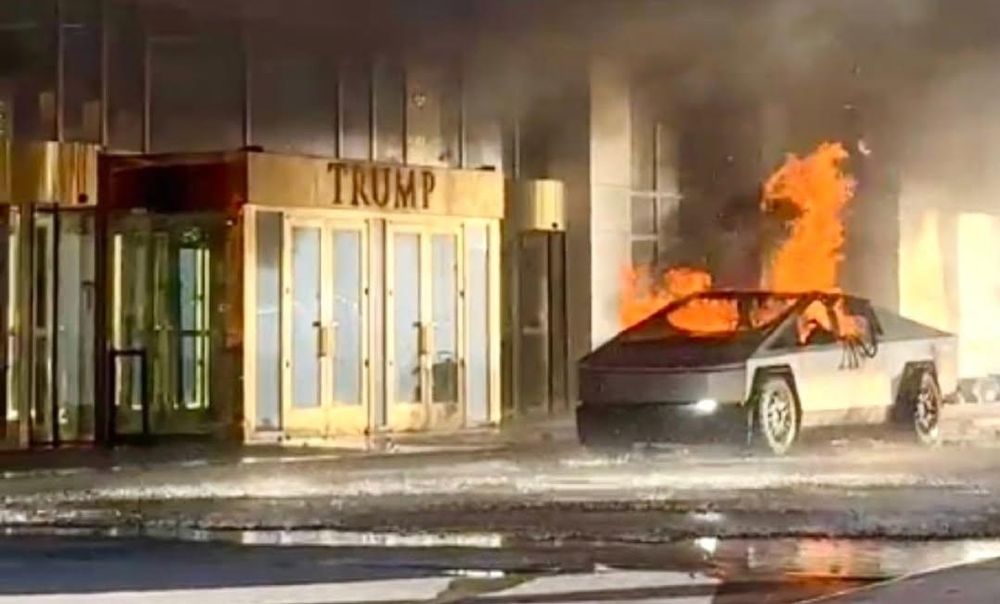
Your car is spying on you. That is one takeaway from the fast, detailed data that Tesla collected on the driver of one of its Cybertrucks that exploded in Las Vegas earlier this week. Privacy data experts say the deep dive by Elon Musk’s company was impressive, but also shines a spotlight on a difficult question as vehicles become less like cars and more like computers on wheels. (…) Many of the latest cars not only know where you’ve been and where you are going, but also often have access to your contacts, your call logs, your texts and other sensitive information thanks to cell phone syncing. The data collected by Musk’s electric car company after the Cybertruck packed with fireworks burst into flames in front of the Trump International Hotel Wednesday proved valuable to police in helping track the driver’s movements. Within hours of the New Year’s Day explosion that burned the driver beyond recognition and injured seven, Tesla was able to track Matthew Livelsberger’s movements in detail from Denver to Las Vegas, and also confirm that the problem was explosives in the truck, not the truck itself. Tesla used data collected from charging stations and from onboard software — and to great acclaim.
via ap: Is your car spying on you? What it means that Tesla shared data in the Las Vegas explosion
siehe auch: #ÜBERWACHUNG – #Cybertruck-Anschlag macht klar: #Tesla kann Fahrzeuge aus der Ferne aufsperren, sammelt Videos – #BraveNewWorld #Datenkrake. Elon Musk persönlich hat sich in die Ermittlungen rund um den aktuellen Vorfall eingeschaltet. Dabei nutzt er den Vorfall gleich, um für sein Fahrzeug zu werben. Während die Ermittlungen rund um einen mit einem Cybertruck durchgeführten Anschlag vor dem Trump-Hotel in Las Vegas noch auf Hochtouren laufen, liefert der Vorfall indirekt auch einen Beleg dafür, welchen umfassenden Zugriff Tesla auf seine Fahrzeuge hat. Ein Zugriff, der in diesem Fall offenbar hilfreich für die Ermittlungen war, den regulären Besitzern solcher Autos aber wohl wenig gefallen dürfte.