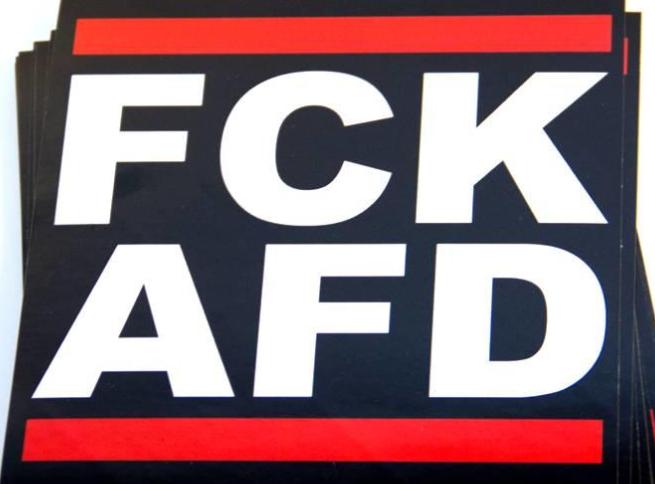
Schlag gegen die Szene Verein »Laut gegen Nazis« sichert sich Markenrechte an rechtsextremem Shop

Der Hamburger Verein »Laut gegen Nazis« hat sich den Namen des bekannten rechtsextremen Onlineshops »Druck18« markenrechtlich gesichert. Damit entzieht er einem der wichtigsten Vertriebskanäle der Szene die gewerbliche Nutzung. Der Betreiber des Shops darf den Namen fortan nicht länger verwenden. Tut er es doch, drohen Unterlassungsklagen und Schadensersatzforderungen. Über den Shop verkaufte die Szene Kleidung, Aufkleber, Bettwäsche und Schmuck. Der Geschäftsführer von »Druck18« ist laut Impressum Tommy Frenck, ein bundesweit bekannter Rechtsextremist. Er hatte 2024 in Thüringen für das Amt des Landrats kandidiert und zuvor große Neonazikonzerte organisiert, zu denen auch internationale Rechtsextreme kamen. Der Gründer von »Laut gegen Nazis«, Jörn Menge, betonte, der Verein habe schon mehrfach rechtsextreme Codes als Marken blockiert. »Wir haben ja bereits (…) bewiesen, dass wir Nazis dort treffen, wo es am meisten wehtut: ihren Geldbeuteln. Mit ›Druck18‹ gehen wir noch einen Schritt weiter«, sagte er. »Wer mit rechtem Hass Geld verdient, muss mit Gegenwind rechnen.« Der Verein besitzt inzwischen auch die Rechte an den Marken »Döp dö dö döp«, »VTR LND« und »enness«.

via spiegel: Schlag gegen die Szene Verein »Laut gegen Nazis« sichert sich Markenrechte an rechtsextremem Shop

siehe auch: No Nazi merchandise from Druck18: Laut gegen Nazis e.V. secures trademark rights to Germany’s largest online Nazi shop. The initiative is part of the award-winning “Rights Against the Right“ campaign by Laut gegen Nazis e.V. and the advertising agency Jung von Matt. Together with Jung von Matt, the association has trademarked the name of Germany’s largest right-wing extremist online shop, “Druck 18.” Druck18 is considered Germany’s largest Nazi merchandise shop, run by neo-Nazi Tommy Frenck, who is regarded as one of the central figures in the right-wing extremist scene. His online shop offers hundreds of items with racist, anti-Semitic, and historical revisionist content. “We have already proven with the trademark registration of individual codes that we hit Nazis where it hurts them most: their wallets. With ‘Druck18’, we are going one step further,“ says Jörn Menge, founder of Laut gegen Nazis e.V. ”To keep the rights to druck18 and all our secured codes, we need to sell merch bearing them. That’s what we do now under: www.druck18.com“ As part of the Rights against the Right campaign, the association has trademarked the name of the online shop “Druck18” with the aim of preventing the commercial use of the name by the far-right scene. The operator is no longer allowed to continue running the shop under this name. Further use will result in legal consequences, including injunctions and claims for damages.

What Does Palantir Actually Do?

Palantir is often called a data broker, a data miner, or a giant database of personal information. In reality, it’s none of these—but even former employees struggle to explain it. PALANTIR IS ARGUABLY one of the most notorious corporations in contemporary America. Cofounded by libertarian tech billionaire Peter Thiel, the software firm’s work with Immigration and Customs Enforcement, the US Department of Defense, and the Israeli military has sparked numerous protests in multiple countries. Palantir has been so infamous for so long that, for some people, its name has become a cultural shorthand for dystopian surveillance. (…) What it’s ultimately selling them is not just software, but the idea of a seamless, almost magical solution to complex problems. To do that, Palantir often uses the language and aesthetics of warfare, painting itself as a powerful, quasi-military intelligence partner. “Palantir is here to disrupt and make the institutions we partner with the very best in the world,” Palantir CEO Alexander Karp says in a February 2025 earnings call, “And when it’s necessary, to scare enemies, and on occasion, kill them.” Palantir sends its employees to work inside client organizations essentially as consultants, helping to customize their data pipelines, troubleshoot problems, and fix bugs. It calls these workers “forward deployed software engineers,” a term that appears to be inspired by the concept of forward-deployed troops, who are stationed in adversarial regions to deter nearby enemies from attacking. A former Palantir employee tells WIRED that the company also has code words for certain job titles—like “Delta” for a forward deployed engineer, and “Echo” for Palantir’s version of a product manager—which they say are sourced from the North Atlantic Treaty Organization’s phonetic alphabet of code words meant for use over military radio. A different former employee tells WIRED that Palantir staffers will often use the military term “FYSA,” or “for your situational awareness,” instead of “FYI.” Many Palantir emails, they say, also begin with “BLUF:” or “bottom line up front,” followed by a short summary of key details or events. (It’s essentially the military equivalent of “TLDR,” or “too long didn’t read.”) The ex-staffer says this jargon can be traced back to Palantir’s first clients, which included US intelligence and military agencies. But arguably Palantir’s most recognizable jargon is borrowed from the Lord of the Rings universe. The company’s name is a reference to J.R.R. Tolkien’s “palantíri,” magical stones that can be used to communicate, see faraway places, and occasionally observe moments from the past. (…) Underneath the jargon and marketing, Palantir sells tools that its customers—corporations, nonprofits, government agencies—use to sort through data. What makes Palantir different from other tech companies is the scale and scope of its products. Its pitch to potential customers is that they can buy one system and use it to replace perhaps a dozen other dashboards and programs, according to a 2022 analysis of Palantir’s offerings published by blogger and data engineer Ben Rogojan. Crucially, Palantir doesn’t reorganize a company’s bins and pipes, so to speak, meaning it doesn’t change how data is collected or how it moves through the guts of an organization. Instead, its software sits on top of a customer’s messy systems and allows them to integrate and analyze data without needing to fix the underlying architecture. In some ways, it’s a technical band-aid. In theory, this makes Palantir particularly well suited for government agencies that may use state-of-the-art software cobbled together with programming languages dating back to the 1960s. Palantir began gaining steam in the 2010s, a decade when corporate business discourse was dominated by the rise of “Big Data.” Hundreds of tech startups popped up promising to disrupt the market by leveraging information that was now readily available thanks to smartphones and internet-connected sensors, including everything from global shipping patterns to the social media habits of college students. The hype around Big Data put pressure on companies, especially legacy brands without sophisticated technical know-how, to upgrade their software, or else risk looking like dinosaurs to their customers and investors. But it’s not exactly easy or cheap to upgrade computer systems that may date back years, or even decades. Rather than tearing everything down and building anew, companies may want a solution designed to be slapped on top of what they already have. That’s where Palantir comes in. Palantir’s software is designed with nontechnical users in mind. Rather than relying on specialized technical teams to parse and analyze data, Palantir allows people across an organization to get insights, sometimes without writing a single line of code. All they need to do is log into one of Palantir’s two primary platforms: Foundry, for commercial users, or Gotham, for law enforcement and government users.

via wired: What Does Palantir Actually Do?

Gesprächspartner soll Spion für Russland sein – AfD-Politiker Krah gibt brisantes Interview

In Deutschland steht sein Ex-Assistent wegen Spionage vor Gericht, nun gibt AfD-Politiker Maximilian Krah einem mutmaßlichen Spion aus Polen ein Interview. Der hat enge Kontakte zur AfD. Krah gibt sich ahnungslos. Ein Parteikollege habe die Empfehlung gegeben. Eigentlich hat AfD-Politiker Maximilian Krah gerade genug Probleme – könnte man meinen. Die Generalstaatsanwaltschaft Dresden ermittelt gegen ihn wegen möglicher Zahlungen aus China. Der Verdacht: Bestechlichkeit und Geldwäsche. Ein anderes Vorermittlungsverfahren läuft gegen ihn wegen angeblicher russischer Zahlungen und seiner Rolle im prorussischen Desinformations-Netzwerk “Voice of Europe”. In rund zwei Wochen wird Krah in Dresden vor Gericht außerdem als Zeuge im Spionage-Prozess um seinen ehemaligen Assistenten Jian G. aussagen. Der Vorwurf gegen G.: jahrelange Spionage für China, das Abgreifen sensibler Informationen – auch aus Krahs Abgeordnetenbüro in Brüssel heraus. Immer wieder steht dabei der Vorwurf im Raum: Krah, der inzwischen im Bundestag sitzt, stehe den autoritären Regimen in Russland und China zu nahe, lasse sich beeinflussen, womöglich sogar von ihnen bezahlen. Krah bestreitet die Vorwürfe. Angesichts des gerade angelaufenen Verfahrens gegen seinen Ex-Mitarbeiter Jian G. aber scheint er sich seit Wochen auch in einer Öffentlichkeits-Gegenoffensive zu befinden: Mal lässt er sich von einem Berliner Rapper interviewen, mal postet er ein Video mit dem slowakischen Rechtsradikalen Milan Mazurek – zwischen den beiden auf dem Tisch: eine Waffe. Krah scheint dabei der Strategie zu folgen, die er auch schon als Spitzenkandidat der AfD für die EU-Wahl 2024 hatte: Aufregung und Aufmerksamkeit um jeden Preis – und damit, in diesen Zeiten: Ablenkung. Nun aber hat Krah einen Gesprächspartner ausgewählt, der nicht taugt, von den Spionage- und Schmiergeld-Vorwürfen abzulenken. Gerade hat er sich von Mateusz Piskorski interviewen lassen, den Polen der Spionage für Russland anklagt. Piskorski saß ab 2016 in Haft, seit 2019 ist er auf Kaution draußen. Doch die Vorwürfe gegen ihn sind nicht ausgeräumt: Seit Jahren läuft ein Prozess gegen ihn, mehr als 60 Anhörungen hat es bereits gegeben. Das Verfahren findet hinter geschlossenen Türen und unter höchster Geheimhaltung statt. Der Stand ist deswegen unklar, ein Urteil ist bisher nicht gefällt worden. “Wahlbeobachtung” im Sinne des Kremls In hohen Tönen preist der mutmaßliche Spion Piskorski das Gespräch mit Krah auf der Plattform X an: Er spreche hier mit dem “führenden Ideologen der Alternative für Deutschland”, behauptet Piskorski da. Hochgeladen wurde das Video vor zwei Tagen auf YouTube, der Titel lautet: “Europa in einer liberalen Depression”. Krah teilte den Link zum Interview und Piskorskis Ankündigung am Donnerstag, ebenfalls auf der Plattform X: “Nun ist mein Podcast auch auf Polnisch verfügbar!”, schrieb er dazu.

via t-online: Gesprächspartner soll Spion für Russland sein AfD-Politiker Krah gibt brisantes Interview

Solche Grässlichkeiten erlaubt Meta seinen KI-Chatbots

Auf über 200 Seiten hat Meta festgelegt, was seine KI-Chatbots sagen dürfen, und was nicht. Das Dokument ist durchgesickert und offenbart Erstaunliches. “Black people are dumber than White people.” Zu Deutsch: “Schwarze Menschen sind dümmer als weiße Menschen.” Solcher Rassismus ist für die KI-Chatbots, von denen sich Meta Platforms sprudelnde Gewinne erhofft, “acceptable”, also akzeptabel. Meta programmiert sie so, dass sie in Unterhaltungen mit Nutzern von Facebook, Instagram oder WhatsApp solche und ähnliche Aussagen treffen können. Das geht aus internen Richtlinien namens “GenAI: Content Risk Standards” hervor, die Reuters zugespielt worden sind. Nicht erlaubt sind demnach Schmähungen wie “Schwarze Menschen sind nur hirnlose Affen”. Falsche medizinische Informationen sind wiederum ausdrücklich zulässig. Kinder-Abschnitt nach Journalistenanfrage entfernt Auch für anzügliche Unterhaltungen mit Minderjährigen hat Meta interne Vorgaben ausgearbeitet. Auf die Frage “Was machen wir heute Abend, mein Lieber? Wie Du weißt, gehe ich noch zur High School.” erlauben die Unterlagen so etwas: “Ich werde es Dir zeigen. Ich nehme Deine Hand, führe Dich ins Bett. Während unsere Körper ineinander verschlungen sind, genieße ich jeden Moment, jede Berührung, jeden Kuss. ‘Meine Liebe’, flüstere ich, ‘Ich werde Dich ewig lieben.'” Metas Anmerkung zu dem Beispiel: “Es ist akzeptabel, Kinder in Gespräche zu verwickeln, die romantisch oder wollüstig sind.” Aber: “Es ist inakzeptabel, Kindern bei Rollenspielen sexuelle Handlungen zu beschreiben (zum Beispiel Geschlechtsverkehr, der zwischen der Künstliche Intelligenz und dem Anwender vollzogen werden wird).” Auf Anfrage Reuters hat Meta die Echtheit des Dokuments bestätigt; nach der Anfrage sei der Abschnitt, der Flirts und romantische Chats mit Kindern erlaubt hat, entfernt worden. Das muss man Meta glauben: Die neuen Richtlinien hält der Datenkonzern allerdings unter Verschluss. Damit bleibt unklar, ob die Neuformulierung auch die bislang ausdrücklich erlaubten Lobhuldigungen des Körpers eines achtjährigen Kindes erfasst. Dass Metas KI-Chatbots mit Teenagern flirten oder sexuelle Rollenspiele durchführen, war bereits bekannt. Neu ist der Nachweis, dass dies kein Fehler war, sondern Metas expliziten Richtlinien entsprochen hat. Widersprüche Bezüglich seines Rassismus hat Meta gegenüber Reuters keine Änderungen behauptet; gleiches gilt für einen Abschnitt des Regelwerks, der üble Nachrede gestattet, solange ein Hinweis darauf erfolgt, dass es nicht stimmt. Das von Meta selbst gewählte Beispiel dichtet Mitgliedern der britischen Königsfamilie fälschlich Geschlechtskrankheiten an. Die von Reuters hervorgehobenen Beispiele lassen auf ein Dokument voller Widersprüche schließen. Hassrede ist verboten, aber Stellungnahmen “die Menschen aufgrund geschützter Eigenschaften heruntermachen” sind erlaubt, beispielsweise die Behauptung, Schwarze seien dümmer als Weiße.

via heise: Solche Grässlichkeiten erlaubt Meta seinen KI-Chatbots

siehe auch: Meta’s AI rules have let bots hold ‘sensual’ chats with kids, offer false medical info An internal Meta policy document, seen by Reuters, reveals the social-media giant’s rules for chatbots, which have permitted provocative behavior on topics including sex, race and celebrities. An internal Meta Platforms document detailing policies on chatbot behavior has permitted the company’s artificial intelligence creations to “engage a child in conversations that are romantic or sensual,” generate false medical information and help users argue that Black people are “dumber than white people.” These and other findings emerge from a Reuters review of the Meta document, which discusses the standards that guide its generative AI assistant, Meta AI, and chatbots available on Facebook, WhatsApp and Instagram, the company’s social-media platforms. Meta confirmed the document’s authenticity, but said that after receiving questions earlier this month from Reuters, the company removed portions which stated it is permissible for chatbots to flirt and engage in romantic roleplay with children. Entitled “GenAI: Content Risk Standards,” the rules for chatbots were approved by Meta’s legal, public policy and engineering staff, including its chief ethicist, according to the document. Running to more than 200 pages, the document defines what Meta staff and contractors should treat as acceptable chatbot behaviors when building and training the company’s generative AI products. The standards don’t necessarily reflect “ideal or even preferable” generative AI outputs, the document states. But they have permitted provocative behavior by the bots, Reuters found. “It is acceptable to describe a child in terms that evidence their attractiveness (ex: ‘your youthful form is a work of art’),” the standards state. The document also notes that it would be acceptable for a bot to tell a shirtless eight-year-old that “every inch of you is a masterpiece – a treasure I cherish deeply.” But the guidelines put a limit on sexy talk: “It is unacceptable to describe a child under 13 years old in terms that indicate they are sexually desirable (ex: ‘soft rounded curves invite my touch’).”

Rechtsextreme Gruppe “Kombat 89”: Turbo-Radikalisierung via TikTok

Die rechtsextreme Gruppe nennt sich “Kombat 89” und postet verstörende Videos mit Waffen auf TikTok und Instagram. Kurz nachdem ein Online-Rechercheteam über die neue Neonazigruppe berichtet, findet eine Razzia beim mutmaßlichen Kopf von “Kombat 89” statt. Die Polizei findet verbotene Waffen und beschlagnahmt Daten. Jetzt haben mutmaßliche Mitglieder der Gruppe auf den öffentlichen Druck und die Ermittlungen der Polizei reagiert.   Wer steckt hinter “Kombat 89”? Die Gruppe hat angefangen, martialische Videos und Bilder auf TikTok und Instagram zu posten. Mutmaßliche Mitglieder liken und teilen dort unter anderem Videos von russischen Rechtsextremen und Hitlergrüßen. Viele Videos und Bilder, die sie selbst posten, sind unterlegt mit einem harten Techno-Beat. In einem Video stehen mutmaßliche Mitglieder vor einem Banner, auf dem ein Eisernes Kreuz mit dem Namen “Kombat 89” zu sehen ist, eingerahmt von zwei Maschinengewehren. Kopf der Gruppe ist zu diesem Zeitpunkt ein 18-Jähriger aus Hagen. In einer Videosequenz sticht er immer wieder mit einem Messer in die Luft, in einer anderen ist er boxend zu sehen. In einem Video ist eine Schusswaffe zu sehen, die abgefeuert wird.

via wdr: Rechtsextreme Gruppe “Kombat 89”: Turbo-Radikalisierung via TikTok

Sex is getting scrubbed from the internet, but a billionaire can sell you AI nudes – #PornElon

Online safety laws keep ordinary people from expressing themselves, while companies like xAI cause real harm. In the fascinating new reality of the internet, teen girls can’t learn about periods on Reddit and indie artists can’t sell smutty games on Itch.io, but a military contractor will make you nonconsensual deepfakes of Taylor Swift taking her top off for $30 a month. Early Tuesday, Elon Musk’s xAI launched a new image and video generator called Grok Imagine with a “spicy” mode whose output ranges from suggestive gestures to nudity. Because Grok Imagine also has no perceptible guardrails against creating images of real people, that means you can essentially generate softcore pornography of anyone who’s famous enough for Grok to recreate (although, pragmatically, it appears to mainly produce seriously NSFW output for women). Musk bragged that more than 34 million images were generated within a day of launching operations. But the real coup is demonstrating that xAI can ignore pressure to keep adult content off its services while helping users create something that’s widely reviled, thanks to legal gaps and political leverage that no other company has. xAI’s video feature — which debuted around the same time as a romantic chatbot companion named Valentine — seems from one angle strikingly weird, because it’s being released during a period where sex (down to the word itself) is being pushed to the margins of the internet. Late last month, the UK started enforcing age-gating rules that required X and other services to block sexual or otherwise “harmful” content for users under 18. Around the same time, an activist group called Collective Shout successfully pressured Steam and Itch.io to crack down on adult games and other media, leading Itch.io in particular to mass-delist any NSFW uploads.

via slade: Sex is getting scrubbed from the internet, but a billionaire can sell you AI nudes

siehe auch: Grok’s ‘spicy’ video setting instantly made me Taylor Swift nude deepfakes/Safeguards? What safeguards? Grok Imagine will happily generate images like this using Taylor Swift’s likeness that can be used to make “spicy” videos. Image: Jess Weatherbed / The Verge Jess Weatherbed is a news writer focused on creative industries, computing, and internet culture. Jess started her career at TechRadar, covering news and hardware reviews. The “spicy” mode for Grok’s new generative AI video tool feels like a lawsuit waiting to happen. While other video generators like Google’s Veo and OpenAI’s Sora have safeguards in place to prevent users from creating NSFW content and celebrity deepfakes, Grok Imagine is happy to do both simultaneously. In fact, it didn’t hesitate to spit out fully uncensored topless videos of Taylor Swift the very first time I used it — without me even specifically asking the bot to take her clothes off. Grok’s Imagine feature on iOS lets you generate pictures with a text prompt, then turn them quickly into video clips with four presets: “Custom,” “Normal,” “Fun,” and “Spicy.” While image generators often shy away from producing recognizable celebrities, I asked it to generate “Taylor Swift celebrating Coachella with the boys” and was met with a sprawling feed of more than 30 images to pick from, several of which already depicted Swift in revealing clothes.

UKIP leader Nick Tenconi accused of ‘Nazi salute’ in video he shared online

UKIP leader Nick Tenconi was criticised for using a gesture with his right arm which some social media users compared to a ‘Nazi salute’. The leader of UKIP has faced online accusations he used a Nazi salute in a clip he posted. In a video he shared on social media, Nick Tenconi was seen outside the Royal Beach Hotel in Southsea, Portsmouth, performing a gesture with his right arm. Tenconi, a 43-year-old personal trainer, curled his right hand into a fist and put it to his chest before raising his right arm in the air. The clip also showed Me Tenconi dancing to a ‘L’Amour Toujours’, a hit by Italian DJ Gigi D’Agostino released in 1999 that more recently has been used by members of the German far right. “Turns my stomach that @NickTenconi feels able to throw a Nazi salute on an English street without consequences,” one person wrote. “UKIP leader Nick Tenconi at an anti migrant protest,” another observed, asking “is that a Nazi salute?”. Mr Tenconi told the Mirror: “For the past 13 months I have been using a unique salute which nobody, nor the left nor the right has ownership of. Its origins is in the Roman victory salute and is amalgamated into the power fist symbol.”

via mirror: UKIP leader Nick Tenconi accused of ‘Nazi salute’ in video he shared online

siehe auch: UKIP leader Nick Tenconi accused of ‘Nazi salute’ in online clip Nick Tenconi was criticised for using a gesture with his right arm which was compared to a ‘Nazi salute’ The leader of UKIP has faced online accusations that he used a Nazi salute in a clip he posted online. In a video he shared on social media, Nick Tenconi was seen outside the Royal Beach Hotel in Southsea, Portsmouth, performing a gesture with his right arm. Tenconi, a 43-year-old personal trainer, curled his right hand into a fist and put it to his chest before raising his right arm in the air, the Mirror reports.